Category Archives: Miniatures & 3D Printing

A catch-all for table miniature gaming, 3d printed terrain, and other oddities.

Designing Tiling Terrain

I’ve been reading Observations of the Fox’s posts about Hexagonal Geomorphs. I’ve looked in this direction before and have played games like Magic Realm (on Boardgamegeek), Battletech, and Star Fleet Battles. And I created a SFB Hex map a few year back, which is up on deviantArt. The Hex-map technique allows an easy simplification of the game map into discrete elements, while allowing more options than the square grid-map. However, with a shift in miniature war-gaming to the inch-based measuring system, using hexes just feels like old times, in both a good and a bad way.

Ultimate Table Top Terrain collection of Hexagonal Terrain does make me drool and shows a different way of using hexes. As large scale terrain pieces that interlock to allow the miniature battles to happen over them, without binding the game to the hex grid. It also allows the army to be set up on one hex for transport, and for the terrain to be (relativity) easily packeted away at the end of the game. Good for places where space is a premium.

So, here is a summary of Michael Wenman‘s series on Geomorphs and helps explore the idea of terrain design for miniature games;

It’s also worth examining ways of making interlocking Sci-Fi walls, which sit on flat cardboard floor tiles. This technique of using card pegs or wedges is one of the simplest I’ve seen. In my 3D Printed designs I’ve started with small pegs that clip into place, but found that they tended to break off, and I’ve moved onto a similar technique of using interlocking joints.

It is worth noting that what ever system you want to use that it fits you needs. For myself I will be looking for the following;

  • Multiple configurations to allow many scenarios to be created. Si I’ll be looking at pieces.
  • Can be easily packed away and transported. So it will most likely be 1 to 2 foot in size.


Ulthwé Wave Serpent

As stated before I’m fan of the Eldar (aka Elves IN SPACE!) Anyone who’s seen the original The Muppets TV series will know how it sounds, and for those that don’t there is youtube…

[embedyt]https://www.youtube.com/watch?v=DrK37awru-I[/embedyt]

I like the idea of the Eldar as much as the visual look of the miniatures with their runes of power. However, I prefer to avoid the 40K game. The way the game is played in short shape battles with defined boarders and objectives does not suit an ancient race slowly dying out wondering the stars on their own craftworlds. Any species with a long history knows that, if you meet strength in opposition it will end in destruction. Any psychic beings worth their minds does not engage in direct conflict, but subtly redirect their opponents into their weapons, or into other monsters. Regardless of my thoughts on the game the miniatures look cool and the few I’ve painted look good.

Ulthwé Wave Serpent with Jetbike support

Ulthwé Wave Serpent with three Jetbike in toe.

Ulthwé Wave Serpent
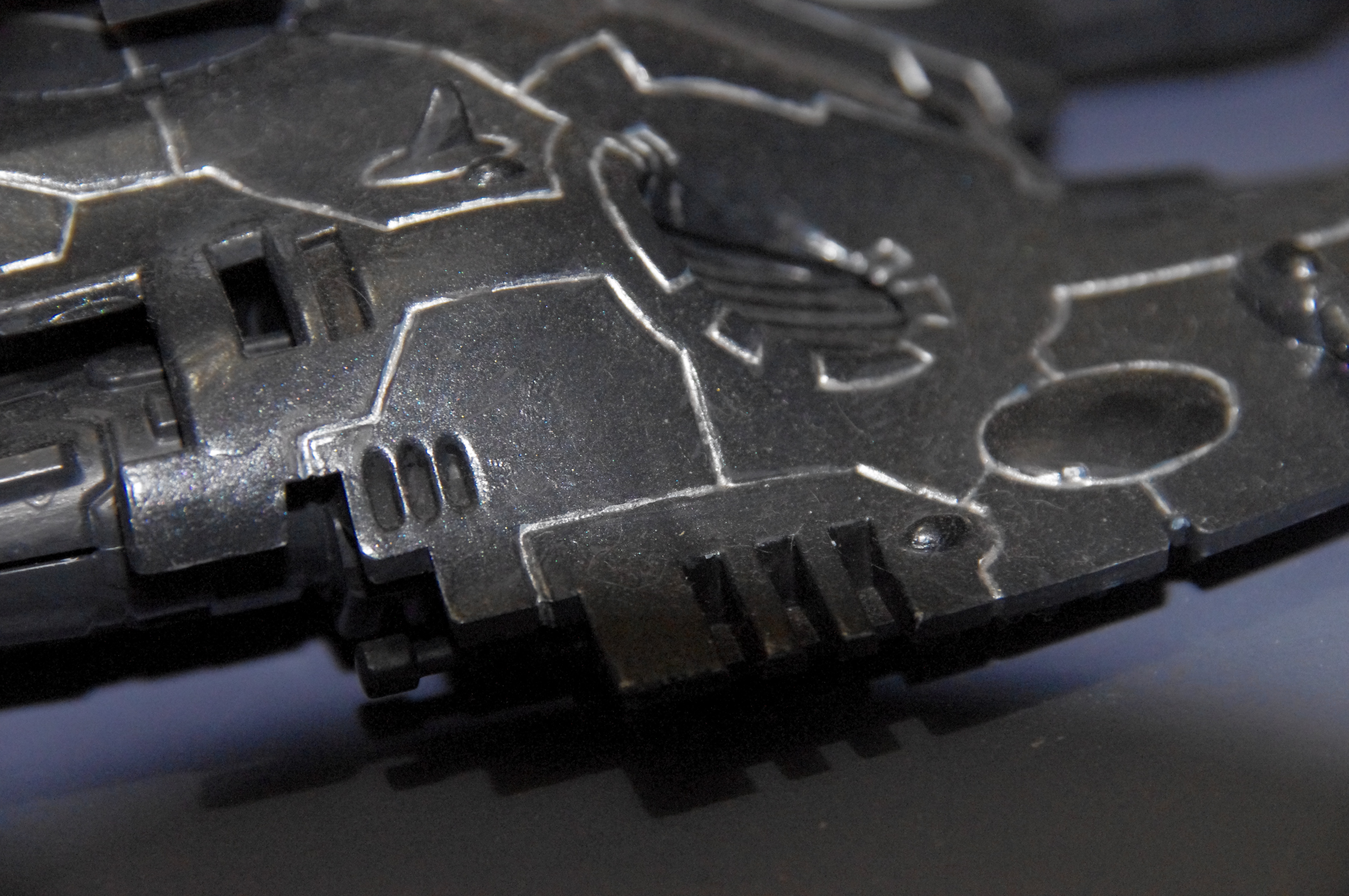
Close up of the Ulthwé Wave Serpent looking at the engines and intakes.
Close up of a Ulthwé Wave Serpent
Close up of the Ulthwé Wave Serpent with a focus on the back hatch and engines.

Stormblade Infantry Bases

I’m currently working on a set of Stormblade Infantry for the local Journeyman league I’m part of. Here’s a breakdown of the bases.

  1. A coat of Charred Brown (72.045)
  2. Lines of Leather Brown (72.040)
  3. A layer of Secret Weapon’s Brown Fine Ballast.
  4. Dots of Charred Brown, Leather Brown, or Tan (72.066) mixed 1:1 with water
Stormblade Infantry bases

More when I finish the Stormblades…

Intro to Warmachine and Hordes

After a lifetime of avoiding Warhammer 40K I did play for about 6 months and like most, I like the fluff and model design, but the gaming group I joined moved on to Warmachine. The following thread does sum up my thoughts. I’m enjoying the painting of models and the tactical game.  To get a better idea of What is the game like, which provides a good summary with an overview of the factions in the Hordes & War Machine games. What they play like, covers the factions along with common misconceptions.

In an intensely tactical game like War Machine there are a number of tactical considerations for the starting wargamer that are important.

  • Whether to go first?
    • Going first can jam the board, and get the first charges.
    • Going second can choose the best terrainreact to your opponent’s deployment choices, start closer to the scenario scoring elements, and start scoring first.
  • Model placement to remain with command range, but avoid too many blast causalities, and handle charges.
  • The measurement of distances. When you can measure and what to look for.

Resources

Warmachine & Hordes – Quickstart rules to get you started with twin games of Warmachine and Hordes. There is also a Journeyman League, which introduces the game in easy stages in the form of a friendly competition. Also, check out the tips for a successful Journeyman League.

Battle College – This was a great resource to get an overview of a model or unit with additional thoughts on its use.

History of Miniature Wargaming Rules

A while ago I got curious about War Gaming, in particular it’s history. Having been an irregular war gamer for the last *many* years and cut my teeth on Battletech. Then expanding into Warhammer 40K, Necurmunda, Space Crusade & Space Hulk. I’d like to try my hand at making a board game or war game of a similar nature. So I was wondering did they all come from? How did they evolve to what we know now, and what influenced that process?

The wikipedia page on Wargaming, giving some insight about hobby and how it started. With the a set of rules been publishing in the early 20th century,  with H. G. Wells’ Little Wars and Jane‘s naval war rules in 1913. It’s also worth noting that Jane also publish All the World’s Aircraft, which is a great research for aircraft of types and is regularly updated.

Little Wars is a set of rules for playing with toy soldiers, written by H. G. Wells in 1913.
Little Wars by H. G. Wells.

John Curry the editor of The History of Wargaming Project has a few videos outlining the project (See part 1 & part 2), and an interesting presentation of the Fletcher Pratt Naval Wargame, which at it’s peak had huge games of 60+ players and did not look like the hobby as I know it now. This was a more social game with people playing on a Friday or Thursday night in large dance halls.

[embedyt] http://www.youtube.com/watch?v=HmpUwvQ70v8 [/embedyt]

RPGs Split off

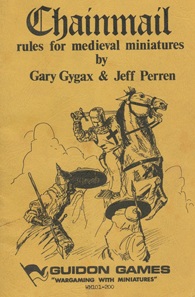
In 1971 Gary Gygax & Jeff Perren published the miniature wargame Chainmail, which lead to Dungeons & Dragons and the RPG explosion of today. However, it is worth remembering that most RPGs model themselves after D&D and as a result have a strong tactical basis for their game play. It’s only later, in early 1990, that more narrative-based RPGs emerged with games such as Whitewolf’s Vampire.

Chainmail is a medieval miniature wargame created by Gary Gygax and Jeff Perren.
Chainmail

Computer based Wargames

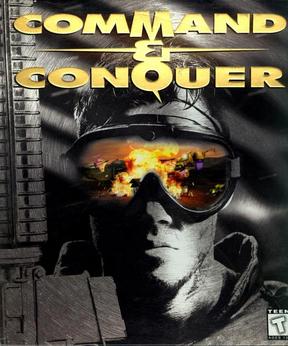
A decade later saw the adaption og Turned-based War Games (See Turn-based strategy (TBS)Turn-based tactics (TBT)) on the computer, with Blue Bytes Battle isles a personal favorite. These in turn led to Real Time Stratagy (RTS) Games, like Dune 2000 and Command & Conquer.


Command & Conquer is a 1995 real-time strategy video game developed by Westwood Studios
Command & Conquer

So going back to the start of all this has given me a better idea of these style of games. Along the way I’ve found some cool projects and some great ideas for my own games, and should aid me in writing one.

3D Bridges built!

About a month ago I created a 3D model of a sandstone bridge, put it up on shapeways. The printed model only took a week & half to arrive (from the other side of the planet). Now that I’ve proofed the physical copy, it’s up for sale on shapeways.

Overall, I’m happy with this model. Some of the colours are a little darker than expected, but not insanely so. The topology needed some correcting. You can see the line of bricks in the center of the bridge.

set for scale, these 3 miniatures give an idea of the size of the bridge
Goblin on the birdge
Soldier defends the bridge


The Bridge
The Bridge

This render of the finished bridge shows the corrected brick tiling. the terrain fearture is available in sandstone and grey stone