Category Archives: Miniatures & 3D Printing

A catch-all for table miniature gaming, 3d printed terrain, and other oddities.

House Framing (Geo-Nodes)

Working on a House Framer using Blender’s Geometry Nodes. The goal is to have a node group that will generate all the needed geometry for the destruction of a house.

The basic frame is complete, but I’ve been staring at these nodes for too long. I’m going to step back for a bit, to research trussed roof construction and eternal cladding. Then circle back once I can get the new details working.

Geometry Node Group for a Basic House Frame

Gumroad to House Frames (Geo-Nodes)

Using Geographic Information Systems (GIS) in Blender

I am looking at the different options for getting GIS data into Blender and my perceived Pros and Cons of each.

Geographic Information Systems (GIS)

Links to different Blender Add-Ons involving the use of GIS (Geographic Information Systems) Data.

Overall, my preference is for BlenderGIS as it gives me the terrain with satellite imagery, and markers (ie cubes) for each of the buildings.

Simple DIY Wet Palette

I’m refurbishing my DIY wet palette to some more miniature painting. It is so simple to create that I’m surprised no one’s done a full breakdown on this. So, one short video later…

What do you need to make your own?

  1. A plastic container with a lid to stop the water from evaporating quickly.
  2. A piece of paper towel folded to fit in the container.
  3. A piece of baking paper to fit on top of the paper towel.
  4. And enough water to soak the paper towel. Just make sure you drain off any excess.

Creating dungeon tiles rollers

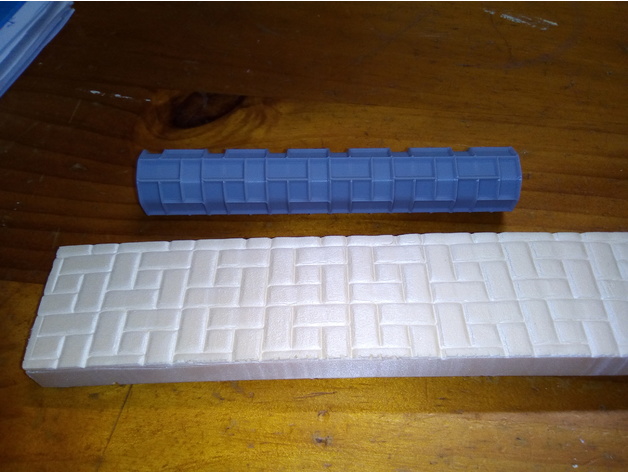
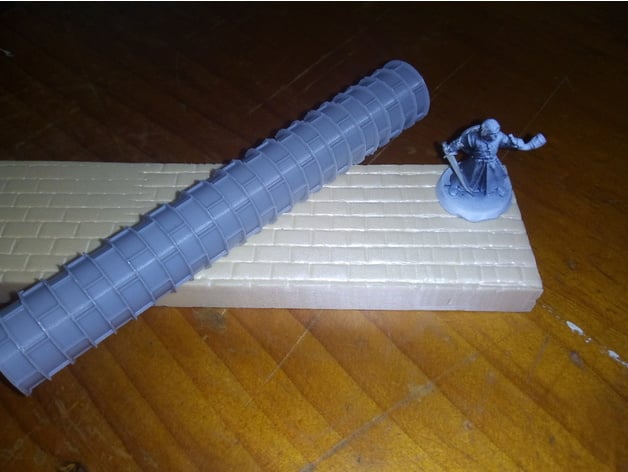
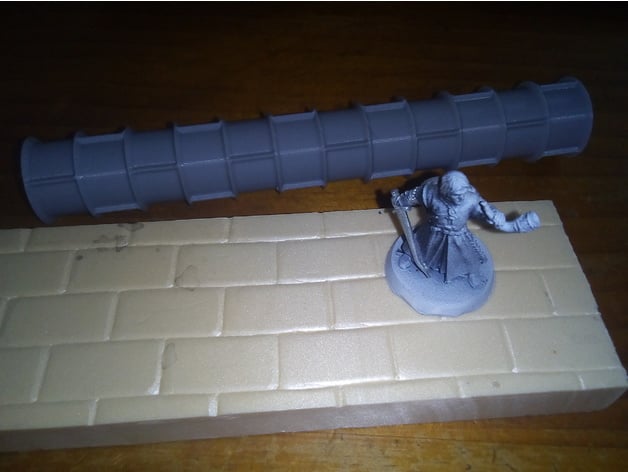
This week I’ve been design and creating dungeon tiles rollers for terrain crafting. The goal is to create a simple pattern that can be replicated around a roller to create a consistent imprint on XPS foam.

The first version was kludged together and mostly work, but the imprint was not square and the design process wasn’t elegant. The second version highlighted errors in the process which could be seen in the distortion when comparing the X & Y directions. 25mm (1 inch ) in X to 29 mm (1 1/8 inch) in the Y direction. Rescaling the size of the cylinder corrected this mistake. Finally, I just need some more patterns…

Research & References

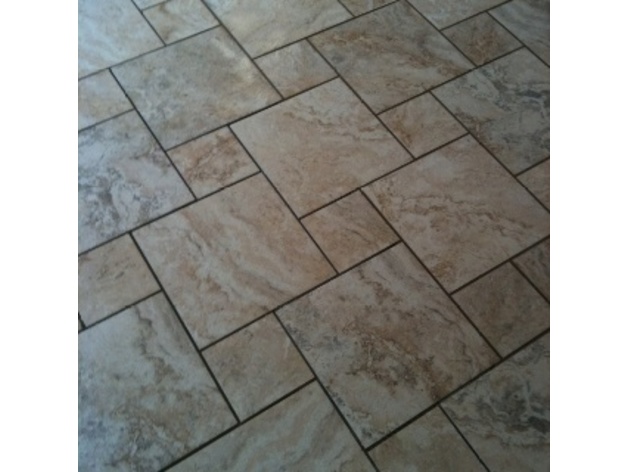
Most research starts with a search (Duck Duck Go in this case) to find suitable images & other resources. It has been very useful having the name of the tile patterns, along with the images to use for inspiration.

The Rollers

Windmill Tiles

Roller for Windmill Tile Pattern

Running Bond Tile Pattern

Flagstone Tiles

Pinwheel Tiles

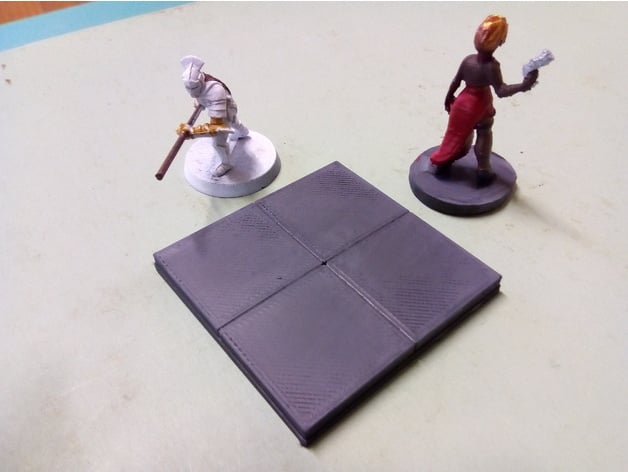
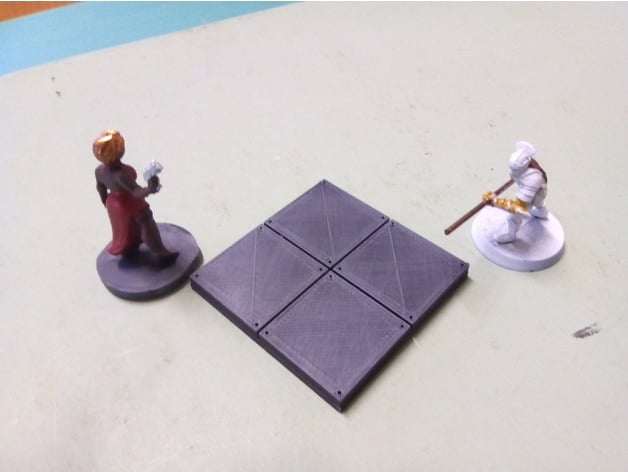
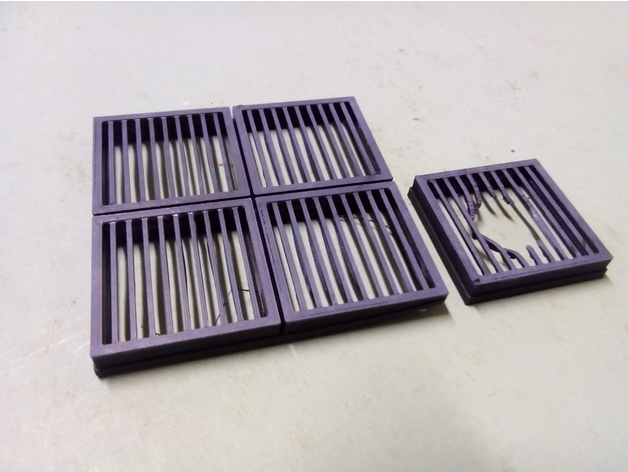
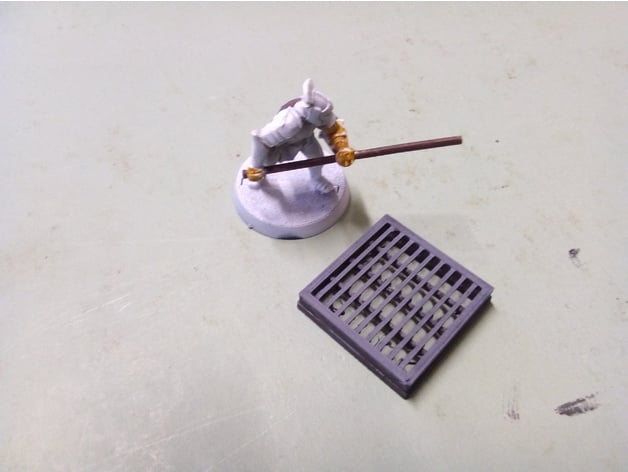
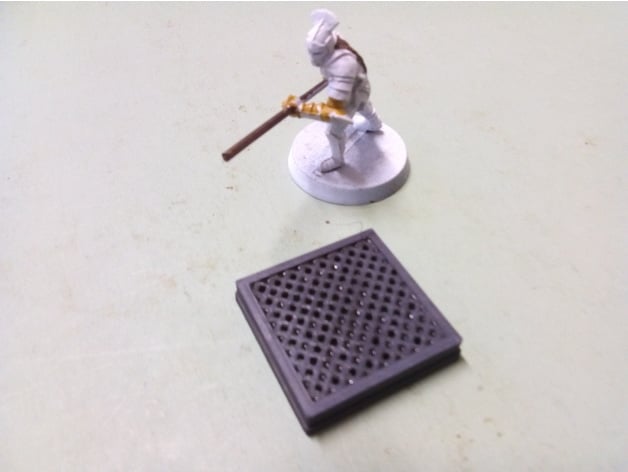
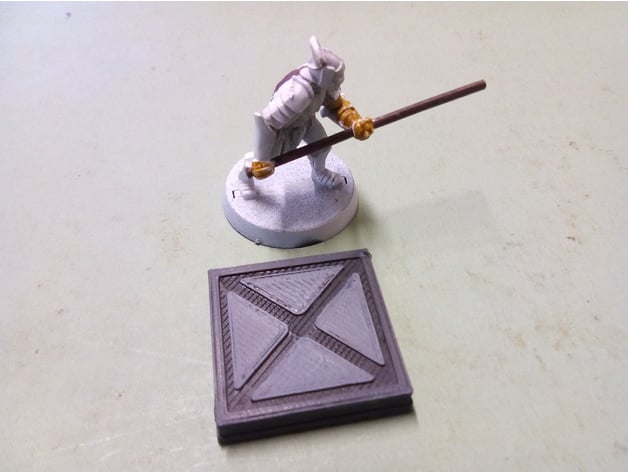
Sci-fi floor tiles

A few years ago, I was working on a set of science fiction themed floor tiles with the idea of releasing them on Shapeways. However, I was not happy with the design as the legs of the pieces snapped off quickly pointing to a flaw in the design. It’s one that could be easily fixed, but the time lag and cost of iterating the design would have been prohibitive. So with other priorities pressing in, I let it slide to the back burner.

Now, just recently I get my first 3D Printer and have been looking as Devon Jones’ designs on Thingiverse. The Terrain tiles and miniatures that he and others have created is truly inspiring, and I’ve been bitten by the 3D design bug again. So, I pulled out some old designs I did in Blender and reworked them to improve the design and create a set of sci-fi dungeon tiles that I could use with Cyberpunk, Shadowrun, Infinity, or Starfinder.

The first was a set of plain tiles, to use as a template for the other designs. Then I took the designs for an age ago and tweaked them to suit the printer.


Adjusting Terrain for Miniatures Bases

Antenocite’s Workshop’s post on how big should doors be, covered the sizes for 18mm, 15mm, 10mm, and 6mm miniatures. I wanted to do the same for 25mm, 28mm & 30mm miniatures, but to include buildings, windows, and other common objects as well. Adapting Figure Scale from Wikipedia I’ve built a reference table, but as I noted in a previous post this is not exact.

[table sort="desc,asc"]
Scale, Figure Ht, mm/foot
1:61, 30 mm, 5 mm/ft
1:64, 28 mm, 4.76 mm/ft
1:73.2, 25 mm, 4.16 mm/ft
1:76, 25 mm (old), 4 mm/ft
[/table]

Now the only problem is the base the miniature is on. it’s a standard 3 mm addition to all the heights, the door article explains the why. So I’ll be adding 3 mm to all the heights , below,

Wall height

Most rooms tend to have an 8 foot (2438.4 mm), 10 foot (3048 mm), or 12 foot (3657. mm) ceiling.

[table sort="desc,asc"]
Scale, 8 ft Ceiling, 10 ft Ceiling, 12 ft Ceiling
1:61, 43 mm, 53 mm, 63 mm
1:64, 41 mm, 51 mm, 60 mm
1:73.2, 36 mm, 45 mm, 53 mm
1:76, 35 mm, 43 mm, 51 mm
[/table]

Door sizes

Looking at the standard 2040 mm high by 820 mm wide door, the numbers boil down to.

[table sort="desc,asc"]
Scale, Height, Width
1:61, 36 mm, 13 mm
1:64, 35 mm, 13 mm
1:73.2, 31 mm, 11 mm
1:76, 30 mm, 11 mm
[/table]

Windows

Windows tend to align with the top of the doors, so use the number above. The common height above ground is 3 feet (914.4 mm). The widths vary a great deal, with windows range from 19¼ in (488 mm) wide up to 69¾ in (1770 mm) wide.

[table sort="desc,asc"]
Scale, Height, Width
1:61, 18 mm, 8 mm - 29 mm
1:64, 17 mm, 8 mm - 28 mm
1:73.2, 15 mm, 7 mm - 24 mm
1:76, 15 mm, 7 mm - 23 mm
[/table]

Tables & Workbenches

[table sort="desc,asc"]
Scale, Height
1:61, 14 mm - 23 mm
1:64, 13 mm - 22 mm
1:73.2, 12 mm - 19 mm
1:76, 12 mm - 19 mm
[/table]

Chairs

[table sort="desc,asc"] Scale, Height
 1:61, 9 mm - 11 mm
 1:64, 8 mm - 11 mm
 1:73.2, 8 mm - 10 mm
 1:76, 8 mm - 10 mm
 [/table]

Above are common sizes for some other common wargames figures, but it’s not everything. For all of the tables of data, I’ve worked from modern Anthropometric and Ergonomic sources. Which is great of modern and near future terrain features. But when creating objects for medieval (or fantasy) you will need to consider historical references or to create the look right through educated guess work. And for Sci-fi, you will have to stick to the design principles by considering it’s function and form. (ie what it will be used for and how to make it look futuristic)

The principle is the calculate the scaled height of the object or feature and then add 3 mm for the miniature base to create the illusion of the correct scale. But do not add the 3 mm to the width of objects as it will distort the size when compared to the miniature.

Miniature Scale, Rescaling and design

What is scale and why is it important for miniatures? It seams like an obvious question, but with miniature gaming it is important to know the scale of what you are creating, how to best manipulate scale to your advantage and to know how much space the gaming table will take up.

With miniature gaming there are two numbers to consider, the scale and the figure height. The scale is the ratio the object is shrunk and the figure height is the approximate height of a 173 cm male (5′ 8” in the imperial system). Some of the common scales are 5 mm (1:300) or 6 mm (1:285) used for micro-armour games such as Battletech and Epic. Along with the 25 mm & 28 mm using in RPGS, like D&D or Pathfinder, and Wargames, like Warhammer40K, Warmachine, or Infinity.

However, this is where things can get complex. GW in their aim to make their minis more impressive made the 25 mm Heroic scale, which is slightly larger that 25 mm and then did the same with the 28 mm Heroic, has lead to some variations in scale. This has been common among miniature companies Even Wikipedia does not agree with it’s self with with 28 mm being 1:56 and 1:64.

There are two useful number to have when designing miniatures or terrain. The first is the figure height, which can be found by dividing the height of a average person (1730 mm) by the scale. And the second, is the scaled foot, which is found by dividing a foot (304.8 mm) by the scale.

Rescaling

It’s all about scale includes these two scale conversion charts (below), and covers why scale is important. In the end the only question should be does it look right and for 28mm anything between 1:56 up to 1:72 should be ok.

Converting between common miniature scales.

A simpler conversion chart with train and miniature scales.

Designing to scale

Since we are designing miniatures and models for gaming. We need to look at Anthropometric, or the measurement of humans. There is a wealth of information in this field, although most of it is only useful in defining the common sizes of people or our miniatures. It’s the application of this idea, Ergonomics, that becomes very useful because it forms the foundations used in the design of products (industrial design), clothing design, houses (architecture), among any others design fields. So in a nut shell everything we use is designed for the human scale and changing scales by guess work can lead to time wasted on a modelling project.

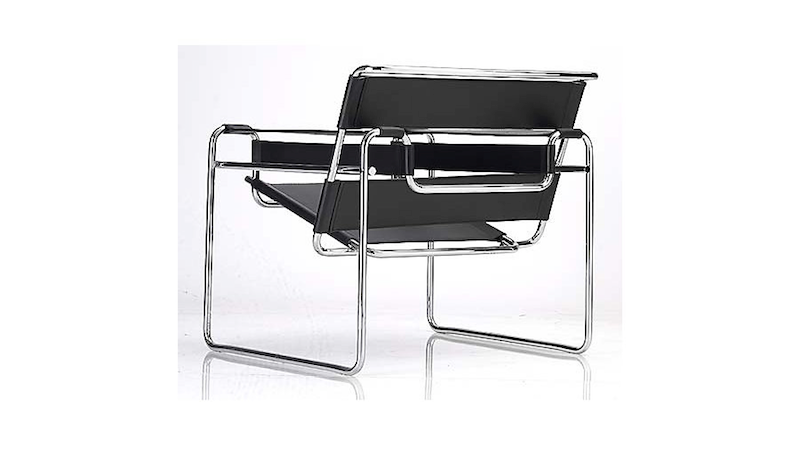
it is also worth looking at the designs of the experts, such as Bauhaus, a German school of design founded in the 1920s that has influenced the modern world. The most well known item to come out of the school is the Bauhaus chair.

Of all the chairs to come out of the Bauhaus, this is the one that commonly comes to mind. Designed my Marcel Breuer, the Wasilly chair is a mix of steel and leather, using no more material than is absolutely needed, while providing maximum comfort. It's a design you'll still find in homes today.
The Bauhaus Chair

Scaling Vehicles

The next step up from everyday objects tend to be vehicle, and Antenociti’s Workshop covers the subject in such excellent design in If I base my figures how big should my vehicles be, that why would I try to do it here.

Also I’d be considering the rescaling tables above to hunt out die-cast kits for cars, and even scale model trains for terrain and buildings.

Scaling Building

Finally there are building, which are usually designed around people and sometimes vehicles. When working on architecture the placement of Windows & Door, and how big should they be.

And finally, if you add a base to your miniature is changes the look of everything.


The Process for Designing Terrain

How do you go about designing good miniature terrain to conduct battles on? Is there a process you can or should follow? When trying to answer these questions I tend to examine what others do and then apply it to my own design process.

Below is the design process that Battleboards.co.uk follows when creating their boards. The finished products are wonderful set pieces for miniature games, however, as I said earlier I’d prefer small tile-able terrain that is easily packed away. However, the design on paper, refine on computer, before committing to physical thing is a excellent fundamental practice.

I tend to start with sketches on paper, as I build up the idea. That way bad or ill considered ideas can be left, and any potential problems can be found before building a large expensive mistake.

It’s something I remember from Engineering, that for a $1000 product if you catch a defect after the sale stage it costs $2500 in product recall and such. But in the design stage it’s $0.03 

Design Considerations

So it pays well to deeply consider how to design anything, and in this case miniature terrain. They can be broadly split in to the two groups of form and function. Form or Aesthetics is the consideration of the look of an object, where Function is more focuses on it’s operation and use. A good place to start are Design elements and principles, and the Engineering Design Process.

There are a bunch of things you should think about before making or buying terrain. These questions should be focused on things like;

  • How you plan on using it?
  • What your budget it?
  • The time needed to make it or acquire the parts?
  • What scale of miniature is it designed for?
  • And others I can not think of at this point…

So for this project I’m setting out what I’m aiming for.

  1. Storage. Do to limited space I need to be able to easily store the parts
  2. Quality. I want have it look good and to make good stuff, because If I can help it, I don’t want to do it all again, or to spend time repairing it.
  3. Scale. I play Warmachine, Warhmmer40K, and Patherfinder/D&D amoung others. All of which tend to be 25-28mm scale.
  4. Variability. I like to be able to mix-up my terrain to suit the individual situation or scenario, because I get bored easily with the same tactical battle.

Modelling Water

One thing I’ll have to consider is how to do good water effects on the terrain tiles I’m planning on building. Thankfully, the TerranScapes channel has a Water Effects video and another experimenting with Silicon.

Dartfrog06mm blog provides an example of a river done in tiles, although it’s 6mm scale. I like the way the river tiles are overlaid on the base terrain.

Now some products. This will not be an exhaustive list, but I have to start somewhere;

My first experiment involved mixing the colour in Craftsmart’s Liquid Gloss to make water effects for rivers and ponds. The results are promising, but next time I’ll paint the base before covering with the clear gloss.